Passivation of Silicon Nanowire.
Introduction.
This tutorial demonstrates the process of creating passivated silicon nanowires based on the work presented in the following manuscript, where the chemical gap tuning in silicon nanowires is studied.
Manuscript
B. Aradi, L. E. Ramos, P. Deák, Th. Köhler, F. Bechstedt, R. Q. Zhang, and Th. Frauenheim, "Theoretical study of the chemical gap tuning in silicon nanowires" Phys. Rev. B 76, 035305 (2007) DOI: 10.1103/PhysRevB.76.035305 1
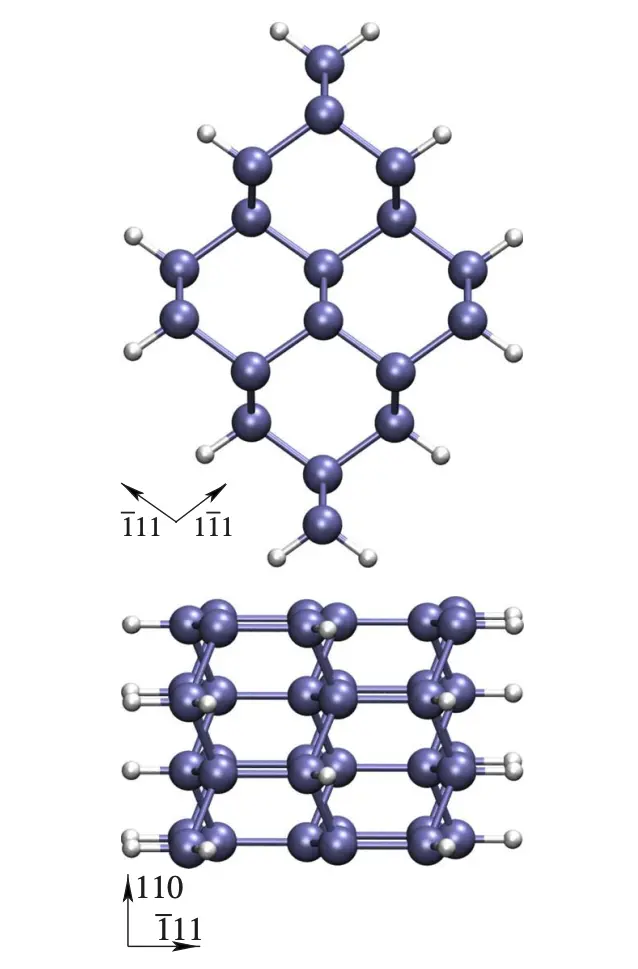
We will focus on creating silicon nanowires with hydrogen passivation from FIG. 1.
Specifically, the material from FIG. 1. of the publication:
1. Create Silicon Nanowire.
1.1. Load Silicon Material.
Since we're using Silicon, it can be already loaded as the default material and we can skip this step.
Otherwise, we navigate to Materials Designer and import the silicon material from the Standata.
1.2. Launch JupyterLite Session.
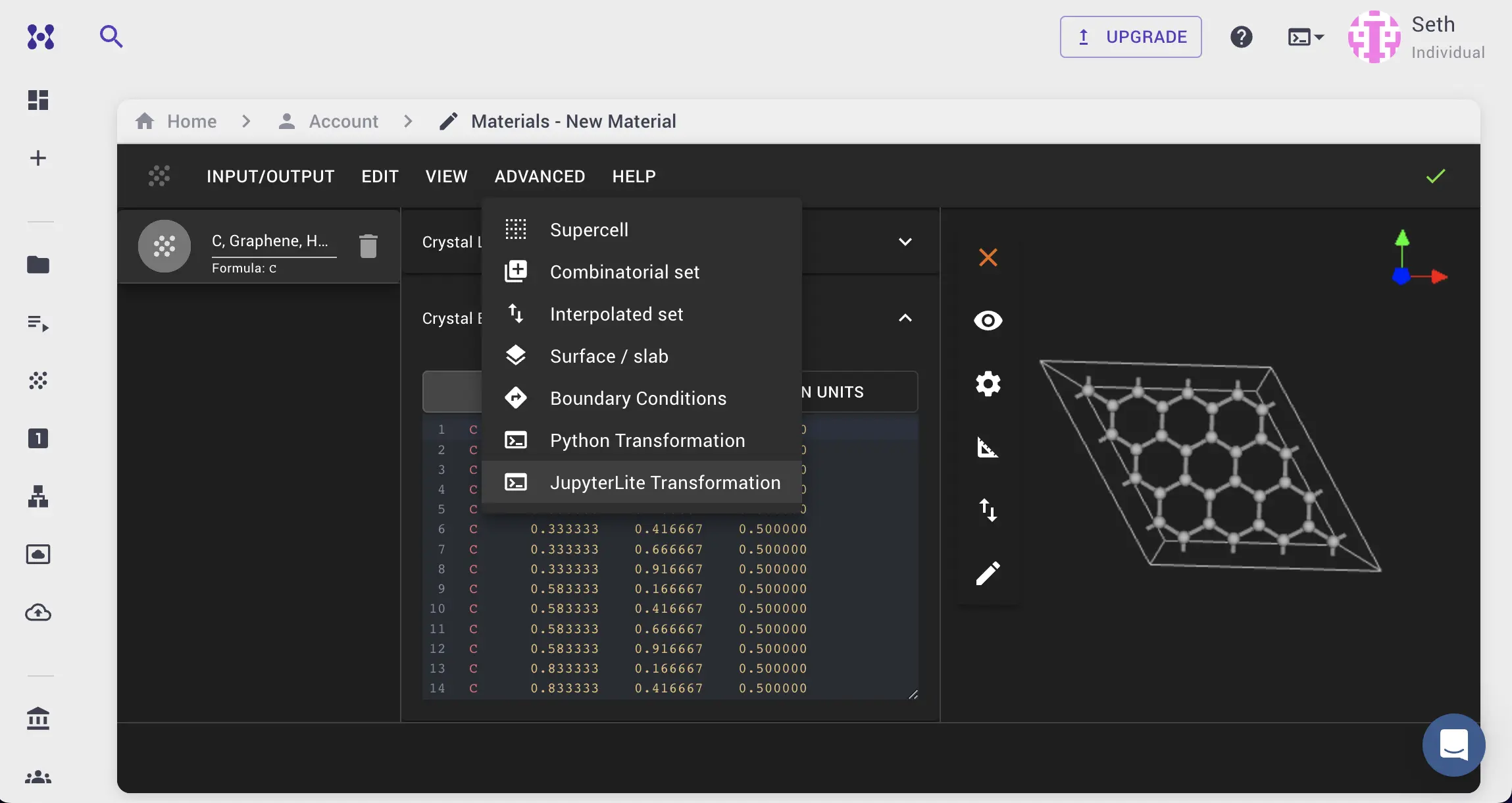
Select the "Advanced > JupyterLite Transformation" menu item to launch the JupyterLite environment.
1.3. Open create_nanowire_custom_shapeipynb notebook.
Find create_nanowire_custom_shape.ipynb in the list of notebooks and click/double-click open it.
1.4. Open and modify the notebook.
Next, we need to create a nanowire wit ha custom shape.
We'll specify the orientation of the nanowire with Miller indices of (1,1,0) as described in the manuscript.
Then we'll define a supercell matrix to add enough of material to cut the nanowire from:
[[3, 0, 0], [0, 2, 0], [0, 0, 2]].
Finally, we'll define a custom coordinate condition to create a rhombus-shaped nanowire with coordinates of the vertices corresponding to the corners of the rhombus.
The vertices of the rhombus are defined as follows:
Bottom:[0.5, 0.2, 0],
Left:[0, 0.5, 0],
Top:[0.5, 1, 0],
Right:[1, 0.5, 0]
For that, edit create_nanowire_custom_shape.ipynb notebook to modify the parameters by adding the following content to the "1.1. Set up nanowire parameters" cell:
1 2 3 4 5 6 7 8 9 10 11 12 13 14 15 16 17 18 19 20 21 22 23 24 25 26 27 28 29 30 31 32 33 34 35 36 37 38 39 40 41 42 43 44 45 46 47 48 49 | |
1.5. Run the Notebook and use the Material.
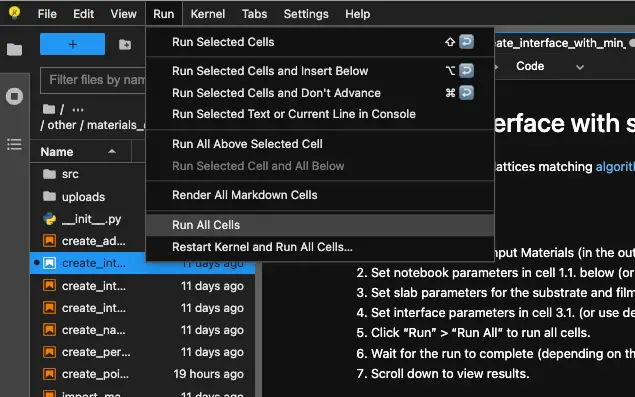
Run the notebook by clicking Run > Run All in the top menu to run cells and wait for the results to appear.
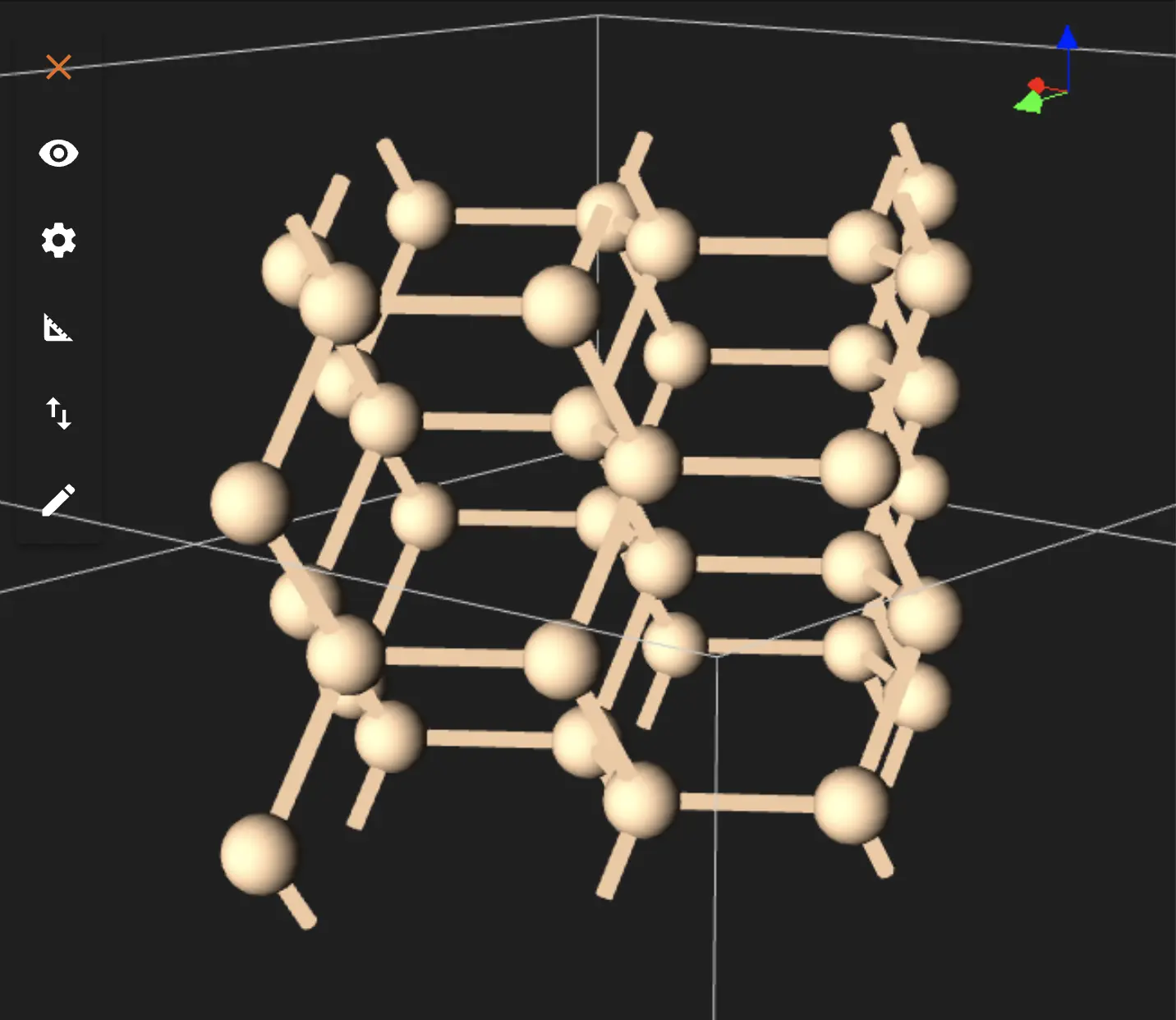
After running the notebook and submitting the material, the user will be able to visualize the structure of Silicon Nanowire.
2. Passivate with Hydrogen.
2.1. Setup the Passivation.
Open JupyterLite Session again and select Silicon Nanowire material for Input Materials.
Next, we need to passivate the silicon nanowire with hydrogen atoms.
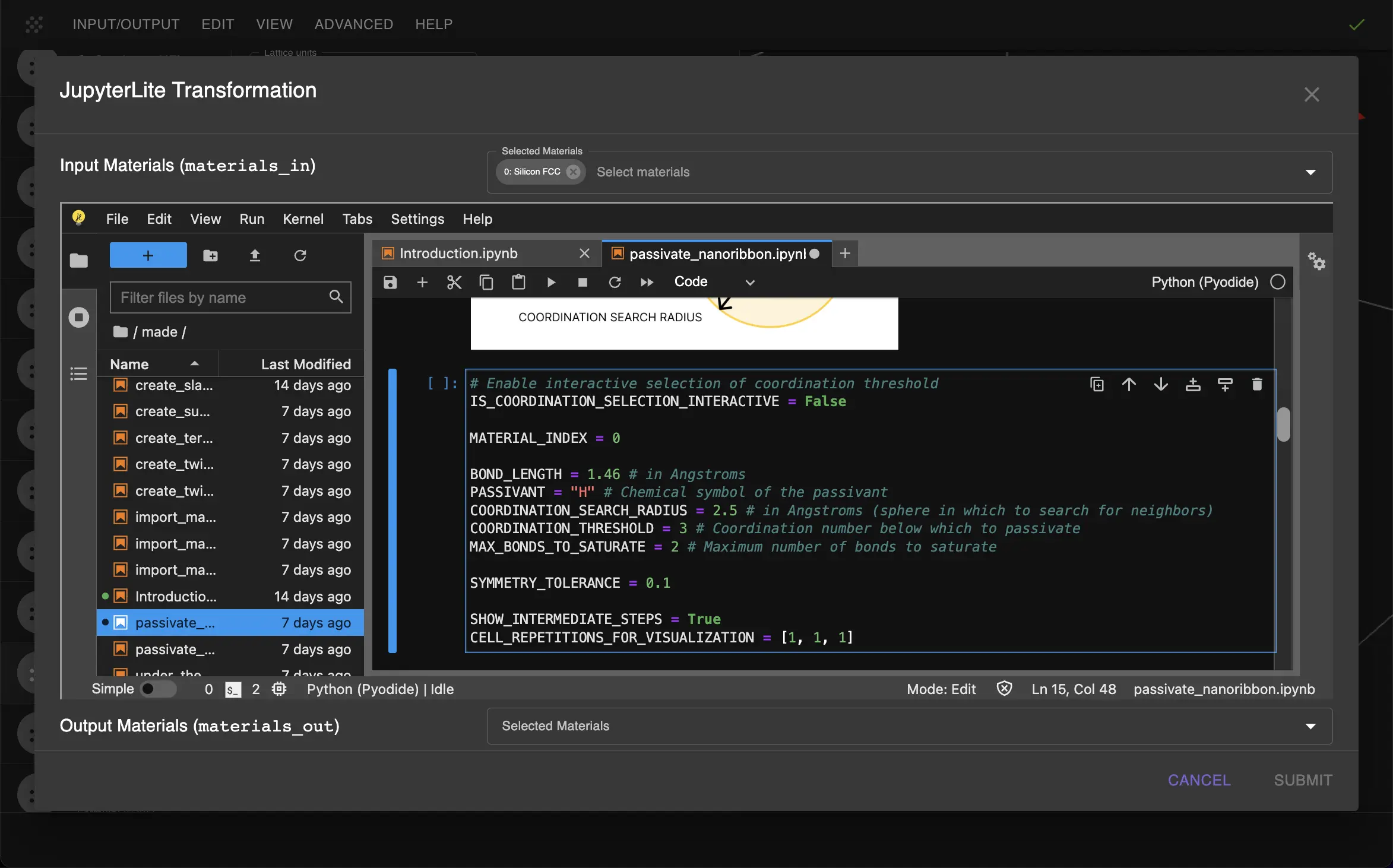
Open the passivate_edge.ipynb notebook and set:
BOND_LENGTH = 1.46 -- Si-H bond length in Angstroms,
COORDINATION_THRESHOLD = 3 -- Silicon that has less than 4 neighbors is undercoordinated in the silicon lattice, so all with 3 or less neighbors will be passivated,
COORDINATION_SEARCH_RADIUS = 2.5 -- Search radius for neighbors for every atom, in Angstroms,
MAX_BONDS_TO_PASSIVATE = 2 -- Maximum number of bonds to saturate for undercoordinated atoms.
Copy the below content and edit the "1.1. Set up defect parameters" cell in the notebook as follows:
1 2 3 4 5 6 7 8 9 10 11 12 13 14 15 16 17 18 19 | |
Here's the visual of the updated content:
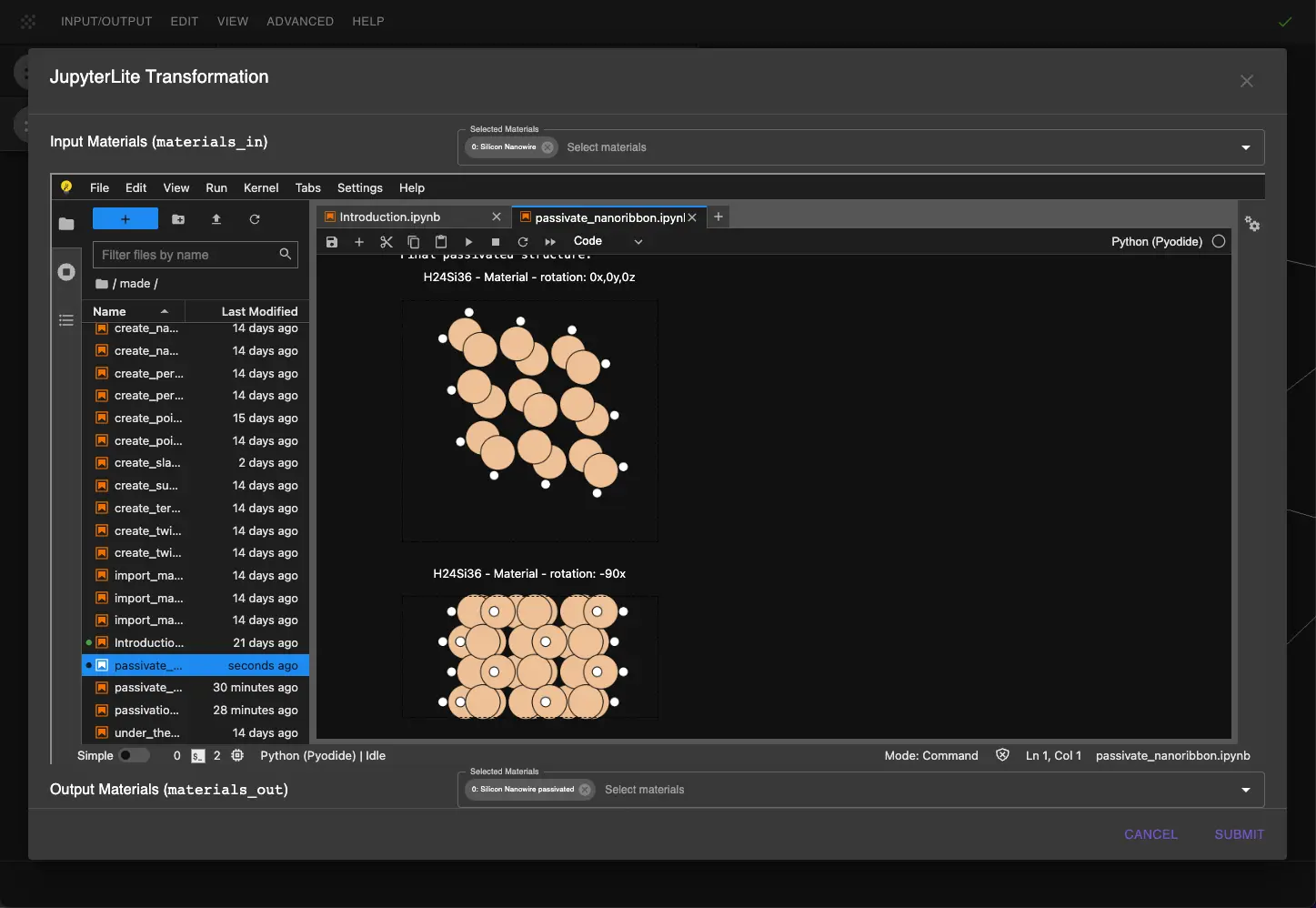
2.2. Run the notebook and analyze the results.
After running the notebook, the user will be able to visualize the structure of Silicon Nanowire with substitution defects.
3. Pass the Material to Materials Designer.
The user can pass the material with substitution defects in the current Materials Designer environment and save it.
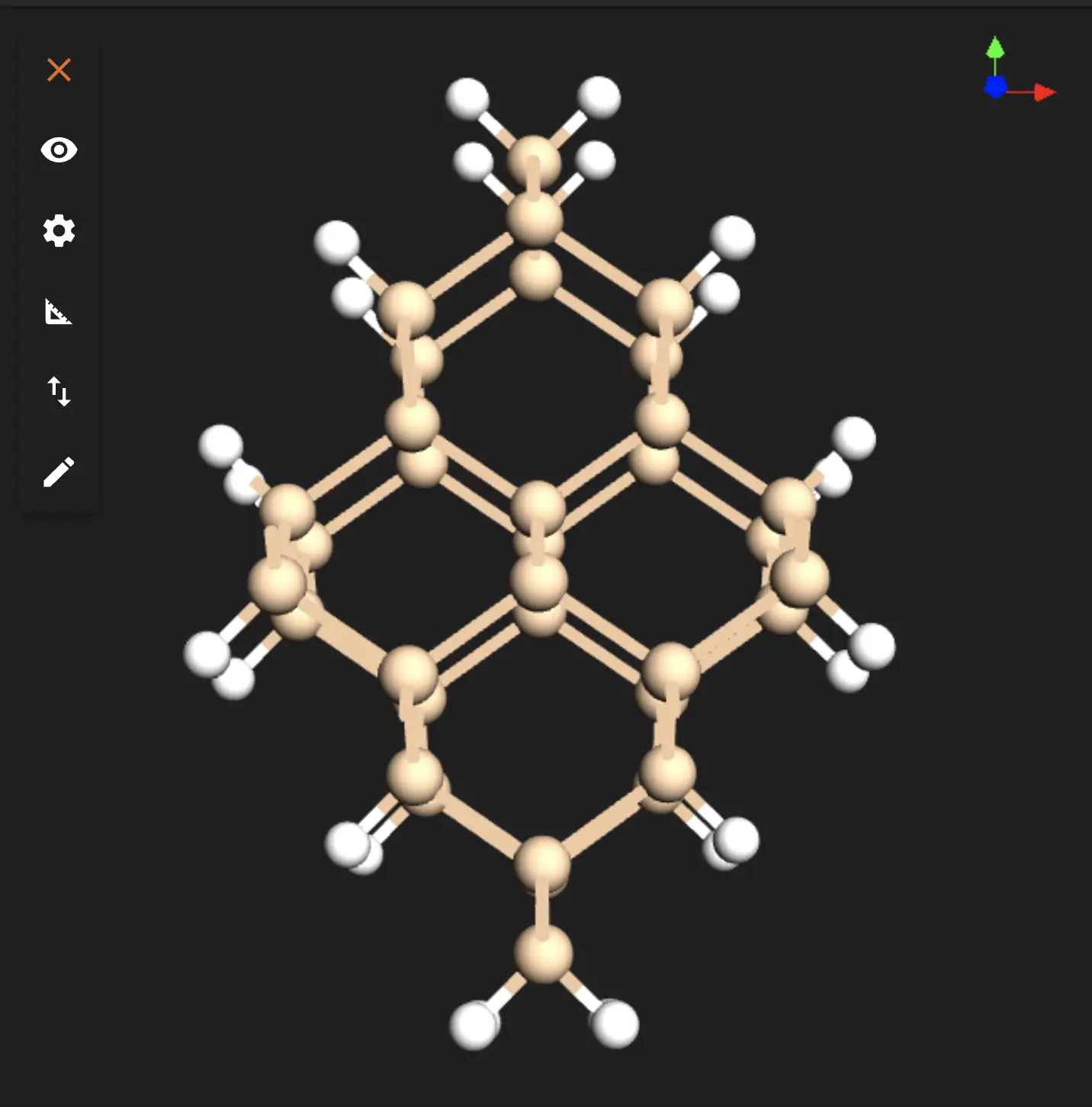
Or the user can save or download the material in Material JSON format or POSCAR format.
Interactive JupyterLite Notebook.
The following JupyterLite notebook demonstrates the process of creating materials with hydrogen passivation of silicon nanowire. Select "Run" > "Run All Cells".
References.
-
B. Aradi, L. E. Ramos, P. Deák, Th. Köhler, F. Bechstedt, R. Q. Zhang, and Th. Frauenheim. Theoretical study of the chemical gap tuning in silicon nanowires. Phys. Rev. B, 76(3):035305, 2007. URL: https://doi.org/10.1103/PhysRevB.76.035305. ↩